
 |
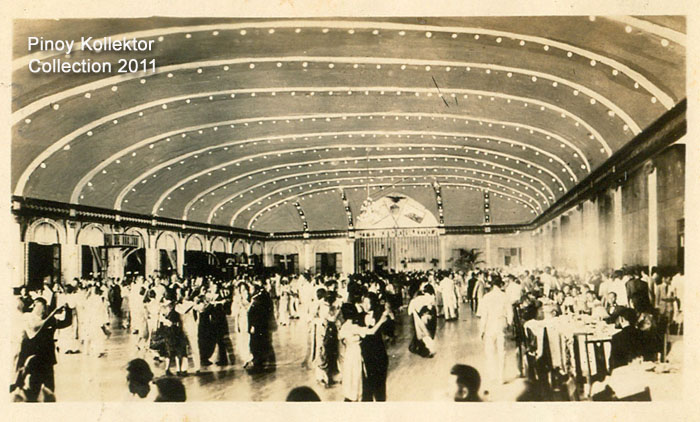
| LERMA CABARET, Manila's leading social center. The most famous place of its kind in the Orient. |


 |
| STA. ANA CABARET advertisement card. |
 |
| Reverse of card |

 |
| LUZON CABARET, Makati Advertisement Card |

 |
| MAYPAJO CABARET, Caloocan Advertisement Card |
Some cabaret is Manila sell tickets to male patrons; one must have a ticket in order to dance with a lady partner. Normally one ticket is good for a single dance per song. If one does not want to change partner he has to buy many tickets.
 |
| Souvenir Fob of PASCUAS CABARET, Las Pinas, Rizal, P.I. JOSE L RAMOS General Merchant |
 |
| Various Cabaret Tickets. Circa 1930s |

 |
| Cartoon featuring cabaret comedies |
 |
| Several reasons why we stay in the Philippine. A scene inside the cabaret. |
 |
| NEW PIT'S BAR in Tejeros, Makati. Managed by Pedro Hizon |
 |
| Post WWII advertisement flyer for American GIs. B-29 INN in Pasig. Managed by Amador Pahati |
STA. ANA CABARET, WHERE MANILA'S RICH AND FAMOUS PARTIED 'TIL THEY DROPPED
Roberto Villarcabral
Originally published on Esquire Philippines, June 2020
▪︎ A MAN WITH THE PLAN ▪︎
The story of Santa Ana Cabaret would not begin without the
story of its proprietor. Giovanni Canzana entered this world a nobody. He was
born in 1878 in the municipality of San Polo Matese, Italy, to working-class
parents. An intelligent man who followed the beat of his own drum, Canzana was
quite the maverick that he plotted a voyage to the United States with one
particular goal in mind - to get rich.
He arrived in Ellis Island by 1903 and found work in the
West Virginia mines. This was where Canzana's initial American episode ends,
because the following year, the restless Italian found himself in the
Philippine Islands, re-locating in Pangasinan and marrying a local named
Hilaria Sikat. They had a tough marriage but had to wait 18 years to be granted
a divorce.
In the midst of that, Canzana had become a naturalised
American citizen and became known to every one as the much more anglicised John
Canson. His determination to distance himself from his impoverished past
transformed him into an entrepreneur with an astute business acumen. He divided
his time between ventures in both the Philippines and the United States.
Among his earliest endeavors in the Philippines was in 1909,
with a bar in Pasig, which turned up a healthy profit. The success encouraged
him to roll the dice further. He took on a lease for a sprawling property at a
nondescript backroad of Tejeros, then a small barrio of rural Makati. On that
property was a small watering hole made of nipa and thatch. Modest, but it
pooled in a good number of customers from the American military. That watering
hole in question was Santa Ana Cabaret.
Named for its border toward Manila's Santa Ana district,
this "cabaret" was no-where near the theatrical cabarets popularised
in France. It was more or less akin to a social club where people can drink,
unwind, and dance.
Canson took advantage of its proximity to Manila and sought
to make it the place for the American community. In 1918 - four years into his
proprietorship - Canson consulted the Atlantic, Gulf and Pacific Company in the
renovation of the Cabaret. It took three years to transform the humble hut into
the grand centre of entertainment from his visions. In 1921, that vision became
a reality.
Little did he know that he was about to establish for
himself a place in the annals of Philippine history.
▪︎ THE DAYS OF WINE AND ROSES ▪︎
By the 1930s, the Cabaret - at two hundred and seventy
metres wide - was renowned as being the largest dance hall in all of the world.
Its edifice, which stretched from width to length, was built with
ninety-per-cent wood and ornamented with the finest chandeliers from Europe.
Canson spared no expense in making sure the Cabaret was well
attended; beautifying the interiors and even hiring the best cooks and the best
hostesses. His daring paid off, as the best of everything attracted the best of
people. Soon it wasn't just the personnel of Fort McKinley who was there for a
tropical respite; but dignitaries, as well.
Certainly, the Cabaret may have been on the narrow road of
Santos Street; but because it was advertised as a place of class and comfort,
such a minor hindrance did not stop the clientele from growing. Its premises, a
stone's throw away from the race track, were conveniently adjacent to a
street-car junction; coach men would wait on the street corner in their small
horse-drawn carriages to drive visitors to their destination, the hottest night
spot of Manila.
The Cabaret was two clubs in one separated by a white picket
fence: One side was where the military guys and lonely hearts can spend time
with "the girls," for one peso a jitter; while the other side was a
place where prominent figures can rub elbows with each other, with tables lined
in white linen and the most premium alcohol available in their hands.
All in all, the Cabaret was a popular place to dance to live
swing music as much as it was a place to dine, boasting of its famous spaghetti
dinners - perhaps the one link left hinting toward the Italian heritage of its
proprietor; one who liked to fashion himself as a man of mystery.
Canson and the Cabaret gained great commendations that a
contemporary publication raved, "He never watered his spirits, his girls
don't try to entice customers, and no body has ever been thrown out of the
club."
What Studio 54 was to '70s New York, Santa Ana Cabaret was
to '30s Manila. Both prided in exclusivity. At the time, the Cabaret had an
Americans-only policy; restricting the average Filipino to wait by the taxi
rings. A few exceptions had been made for the Filipino of influence: tycoons,
artists, intellectuals, and politicians.
President Quezon was a frequent patron; not to mention
friends with Canson. On a few nights, he would bring over General MacArthur,
who in turn became a regular himself. Through Quezon, by extension, it also
became the Nacionalista Party’s favorite place of leisure, so much so that they
later held a convention for Manuel Roxas’ presidential candidacy at the
Cabaret.
A well-regarded local composer would scribble down his
kundiman on the napkins there - drunk. Mentions have been made of the Cabaret
in contemporary novels of Tagalog writers. International personalities also
visited. Famed big band leader Benny Goodman even performed at the Cabaret's
stage, jamming together with the house band. Indeed the Cabaret's reputation
was global, it was even featured in Life magazine.
For soldiers and sailors, the Cabaret was on their bucket
list of places to visit once they were docked in Manila. For John Canson, a man
who came from nothing, the Cabaret was his place; his domain where can he lord
over very important people, even if it were just for a few hours. For once in
his life, he too felt important. For once in his life, he was a some-body. His
hard work and strong will led him to where he was, looking proudly over the
foyer at what he had achieved. This was his Xanadu. This was his American
Dream.
▪︎ WHEN THE MUSIC STOPPED ▪︎
It was December 7th of 1941. The patrons of Santa Ana
Cabaret were going about with the festivities, drinking and laughing in
merriment, dancing away in their fox-trot cotillion. None of them would have
suspected that this would be the last night of halcyon.
The following day, the Second World War officially arrived
on Philippine shores... and so did the Axis. The Axis powers - by way of their
Eastern emissary, the Japanese army - made their presence known via an air raid
on Clark Air Base, a mere ten hours after they had on Pearl Harbor. But it was
only a warning.
The Japanese assimilated Lingayen Gulf by December 22nd;
working their way through Manila. On a gloomy Christmas, MacArthur declared
Manila an open city and moved the Commonwealth Government to Corregidor. A week
later, on January 2nd of 1942, the Japanese occupied Manila.
MacArthur fled for Australia on March 11th. President Quezon
proceeded his move to the United States in order to operate his
government-in-exile there. Not before long, he instructed José Laurel to take
charge as the liaison between the Japanese and the Filipino people, hoping this
will lessen the sting of occupation.
Quezon never returned, succumbing to tuberculosis. President
Laurel ushered in a critical era in the Philippines as a puppet state of Japan.
As the new set of colonisers proceeded to strengthen their hold, citizens -
Filipino and American alike - were captured and imprisoned. Among them was
Canson, who was ejected from his throne and whisked away to a concentration
camp in Los Baños.
In Canson's absence, the Cabaret's wide space became a
garment factory for the Japanese army. The consequences of the War would
gravely affect the already strenuous social divisions of the country, with the
Philippine elite - some of whom Canson had remembered celebrating their best
years at the Cabaret - collaborating with the Japanese.
MacArthur returned in the tail-end of 1944. Beginning on January 9th, his troops arrived
on Lingayen Gulf and gradually took hold of Luzon. It took most of February to
reclaim Manila, but once they did, POWs were liberated. Among them was a
grateful Canson, who generously offered the Cabaret as a make-shift hospital
for the wounded.
▪︎ LIFE AFTER PEACE TIME ▪︎
The War came and went, and the Cabaret resumed operations.
While on the surface, the effects of the War were not seen, its spectre
continued to be felt. A few years into his reinstated tenure, Old Man Canson
realised it was time to retire. He turned the property over to his son, John
Jr., in 1953.
The younger Canson decided to extinguish the Cabaret's
stigma of being an elitist establishment. Hence, he allowed the Cabaret to open
its doors to working-class Filipino men seeking to dance their woes away. He
devised a protocol where patrons could pay a few centavos for a ticket, which
bought a few hours of dancing, dining, and being in the company of "guest
relations officers".
While the Cabaret did thrive after the war, it was never the
same. The boom of more accessible establishments, as well as the
neighbourhood's deterioration, contributed to its rapid decline in terms of
popularity and quality. Its wood furnishes had suffered dilapidation since the
War. Testimonies of its latter-day operations describe the Cabaret as a
"dark" and "trashy" place where the "dancers looked
dismal," a "far cry" from the high-class establishment relished
by their fathers and uncles.
John Canson died in 1960; his legacy to Philippine society
now a shade of its once-lustrous self. The issue of the joint being a
"cabaret" re-surfaced and would this time provide its commercial
undoing, as the term now carried a negative connotation of sex and sin. It was
a taboo of a morally repressed nation smothered predominantly on a tight
Catholic upbringing.
▪︎ A BITTER-SWEET END ▪︎
In the first quarter of 1970, there were talks of the Makati
government purchasing the property with the intention of putting up a public
high school in its place.
Apparently this did not push through, and later that year,
in November, the Cabaret became one casualty of a flood caused by Typhoon Patsy
[Yoling]. Ironic how it withstood the carpet bombings of the War but couldn't
stand a chance against the forces of Mother Nature. By then, its ruins
resembled an abandoned haunted house. The neighboring residents utilised its
vast tracts of land as a place to plant their home-grown crops.
This would be referred to as the "Garden." The
young children made the Garden their play-ground and their favourite spot was
the large tree near where the Cansons' abode once stood. At the turn of the
decade, President Marcos enacted the BLISS [Bagong Lipunan Improvement of Sites
and Services] housing project and converted the property into one of many
developments for low-income families to reside.
Today, the Tejeros Garden BLISS apartment complex stands in
its place. Its tattered roofs and withered walls tell the song of Santa Ana
Cabaret. From its days as a small social club to its re-vamp as the dance hall
of the century, from the shackles of War to the twilight years of obscurity, it
was a chronicle of Manila's brief ascent as a nacreous premiere city recognised
beyond the Pearl of the Orient.
Through it all, this was the story of John Canson. Of his
good times and his bad. The faint strains from the popular song, Ahlert and
Turk's "I Don't Know Why", fits the Cabaret's perennial tune and
continue to loom the stifling evening air. We don't know why, either.
Some-times, parties have to end.
Those were the old days...Sadly iba na ng connotation ng cabaret ngayon kaysa dati. parang yung word na "hostess" na dati ay magandang tag-uri sa babae. I think there are still some small time cabarets existing in Caloocan esp. in 3rd Ave.
ReplyDeleteBtw, fantastic collection talaga ito. Congrats!
Hi Dennis... noong kabataan ko nakapasok ako Cabaret. I did not dance with a lady, I just have beer. :)
ReplyDeletePareho pala tayo sir...kaso ako nag-dance sa lady hehehe ;)
ReplyDelete...Very interesting collections!
ReplyDeleteThe cabaret was later replaced by the nightclub, and much later by the beer garden, and now KTV bars.
ReplyDeleteI have a Santa Ana Cabaret 1938 Poster/Calender. It is very large. It is a print of naked woman and a black horse. It is signed but I'm not able to make out the name. Do you have any advice on how I learn the artist name? Could it be Y?FNE PATT?N.
ReplyDeleteIt is truly amazing. Thank you in advance.
That poster is quite scarce. Most of the pre war posters here did not survive, because it was destroyed during the war and our humid climate. Can you email the picture to lumang.gamit@yahoo.com.
DeleteIs this page still active?
DeleteHi!
ReplyDeleteI am Jenn. I came across this blog post about Cabaret in the Philippines. I am currently doing a research about the International Cabaret, the one on 3rd Avenue, Grace Park, Caloocan City. The said building is featured in of the episodes of our Basketball Documentary that we are producing for National Geographic Channel. As of now, the building (international cabaret) is now an abandoned building and became a housing tenement, and believe it or not, has a basketball court in the middle of it
In one of the photos you posted in the blog was the Maypajo Cabaret in Caloocan. I would like to ask where you have found these photos? I am hoping (rather keeping my fingers crossed) if the Maypajo and International Cabaret is the same building. I need to get some
background ideas, photos if possible of the said building during it's high time as a well-known cabaret, until it suddenly transformed into a brothel later on.
I hope you can help me regarding this matter. Thanks! :)
Email me at lumang.gamit@yahoo.com
DeleteThis is a wonderful site! I had been looking for pictures of the real Santa Ana Cabaret for a year now. I wish I had found it sooner. You may be interested to see my website, The Yellow Bar, named after the novel I just published. The Santa Ana is featured quite a bit in it. Though I'm promoting my book, the site is all about colonial American Manila. Trade links? Thank you Pinoy Collector! Cheers from Jakarta,
ReplyDeleteJohn
I have read some of your book. It is very good.
DeleteHi John,I read a portion of your book from amazon and it is so nostalgic. Will buy your book if ever i find it in a bookstore. Ed
ReplyDeleteHello, just sent you an email. Will send you the book. Again, I just LOVE your blog!
DeleteHi, Would you have interesting trivia about the Sta. Ana Racetrack and photos as well? Just want to know about people's entertainment options back in the day without internet. Also, were politicians or celebrities guests in the Cabaret? I wonder... Hope to hear from you. Thanks!
ReplyDeleteWell, Generals MacArthur and Eisenhower went there a few times before they were famous. The Santa Ana Cabaret was one of the first desegregated "classy" joints in old Manila. It was a strange place: in some pictures you can see a small picket fence. On one side, you could find "comfort girls" for hire. On the other side, it functioned just like a regular night club. There are many stories...
Deletedoes anyone here have a photo of the exterior of the said cabaret?
ReplyDeleteI'm from Barangay Tejeros Makati City and my father who was then in the Barangay used to research about this. sad to say he died last 2010 and didn't see this site
To: Pinoy kolektor,
ReplyDeleteSir, meron pa po ba kayong old picture ng Sta Ana Cabaret na merong orchestra playing? kasi po dun naging sikat ang tatay ko as a Trumpeteer ng mga Swing bands tulad ng...Tirso Cruz sr Band, Pete Aristorenas Band or alikes..yung mga old pics nya with contemporaries ay nasira ng baha at wala kaming narecover...may mga kuha po cya nuon kasama nya c John Canson Sr with GI's...just hope na meron pa po kayong naitatago! salamat po ng marami sa inyo more power sa site nyo!
Greg Ponce
Sta Rosa city of LAGUNA
So my aunt just informed me my mother's grandfather owned the Lerma cabaret. I am 28 now and I would love to look for any memorabilia of it to show to my kids and pass this on..do u have any other pictures or anything else related to it
ReplyDeleteHi Lerma, I do not have any other memorabilia except for the postcard up there.
DeleteHi Katrina...may i know your parent's name? I am doing the Lerma geneological history. I am also looking for owner of the Lerma Cabaret.
DeleteI found this article about SANTA ANA CABARET in LAHAT 1900s page in Facebook
ReplyDeleteIn the 1920s, the Santa Ana Cabaret was the place to be. Horse-drawn carriages brought everyone, from Manila’s elite to U.S. servicemen, to this grand ballroom that claimed to be the largest cabaret in the world.
The cabaret started in France, it initially referred to any business serving liquor. However, the history of cabaret culture began in 1881 with the opening of Le Chat Noir in Paris. It was an informal saloon where poets, artists and composers could share ideas and compositions.
The cabaret was introduced by the American as a form of entertainment for their citizens, soldiers and also to influential Filipinos. It featured comedy, song, and dance in a restaurant or nightclub with a stage for performances and the audience sitting at tables often dining or drinking, watching the performance, or dancing.
When Manila became an American city, it partied like one. In 1911, A New Yorker named John Canson opened the Santa Ana Cabaret on H. Santos Street in Manila. The cabaret was promoted to have the best dancing music in the Orient and the largest cabaret in the world, being 100 feet long and 100 feet wide. The best bands and orchestras of the country performed here while visitors waltzed, fox-trotted, quickstepped, or swing danced.
The Santa Ana Cabaret is where trendy Manileños and US soldiers danced, drunk, and dated. For the men, tickets for one peso or less were sold to have a dance with a female partner for one song. Normally one ticket is good for a single dance per song. If one does not want to change partner he has to buy many tickets.
The Santa Ana Cabaret survived the Battle of Manila during World War II because it was on the outskirts of town. After the war the cabaret scene changed into a Mediterranean-style brothel. A bar with tables and women who mingle with and entertain the clientele. Traditionally these establishments can also feature some form of stage entertainment, often singers and dancers. But just like brothels, prostitution silently arose from Manila's cabarets.
The Santa Ana Cabaret stayed intact through the 1950's and the 1960's. It was destroyed by a flood in the 1970s during the course of typhoon Yoling and was redeveloped as a racetrack that sported thoroughbred horseracing.
Currently the area where the cabaret stands before is being considered to be a part of Circuit Makati. Circuit Makati is Ayala Land’s latest business, shopping and leisure district project.
I have seen photo of the Sta Ana Cabaret from the outside. The street is very narrow.
ReplyDeleteH. Santos Street in Makatai is only 540 meters long. It is a very narrow, congested street. At its north end is Kasilawan Barangay Hall. Midway is Tejeros Barangay Hall and the Makati Tenement Housing Project. The south end of the street is Puregold Supermarket. The former site of Sta. Ana Cabaret could be any of those I've mentioned and none of those is part of Circuit Makati.
ReplyDelete